
Golden's original home station—welcoming travelers since the 1870s
Our History
Our History
Estrella de Oro sits on one of Golden's most storied properties—a landmark built in the 1870s when dusty stagecoaches rolled through Colorado's gateway to the Rocky Mountains.
The Stagecoach Era
Golden wasn't just another gold rush town. Founded in 1859 and serving as Colorado's Territorial Capital from 1862-1867, Golden became the critical supply hub for miners heading west into the mountains. When the Overland Mail and Express Company needed stations along their route, they built home stations like ours—the larger stops about 50 miles apart where travelers could get a hot meal, fresh horses, and a place to sleep.
By 1861, stage lines connected Golden to Central City, Black Hawk, and the Clear Creek mining districts. The Central Overland, California & Pikes Peak Express Company operated an impressive network requiring over 1,700 horses and mules across 46 stations between Denver and Salt Lake City. Our building, with its main structure dating to 1873, stood as part of that infrastructure connecting frontier Colorado to the wider world.
The stagecoach era ended abruptly when the Colorado Central Railroad reached Golden on September 24, 1870. Within a few years, rails extended to the mining camps, and buildings like ours found new purposes.
A Working-Class Victorian Neighborhood
Our property sits in Golden's 8th and 9th Street Historic District, a locally protected area that preserves the character of a working-class Victorian neighborhood dating to 1859. This wasn't where the mine owners and railroad barons lived—this was where the workers, shopkeepers, and tradespeople made their homes.
The neighborhood once housed the Golden Pressed & Fire Brick Works (established 1890), Rock Flour Mills, and Golden Paper Mills—notably the only paper mill west of Missouri for many years. The modest Victorian homes and brick construction reflect the practical needs of Golden's blue-collar community during the town's Gilded Age boom from 1870-1900.
The Keske Family Legacy
Dr. William Adam Keske and his wife Janis purchased our property in April 1994 and began a 31-year stewardship that transformed it into something special. Dr. Keske practiced veterinary medicine right here at 807 9th Street, while Janis had a vision for the property's potential as a welcoming retreat.
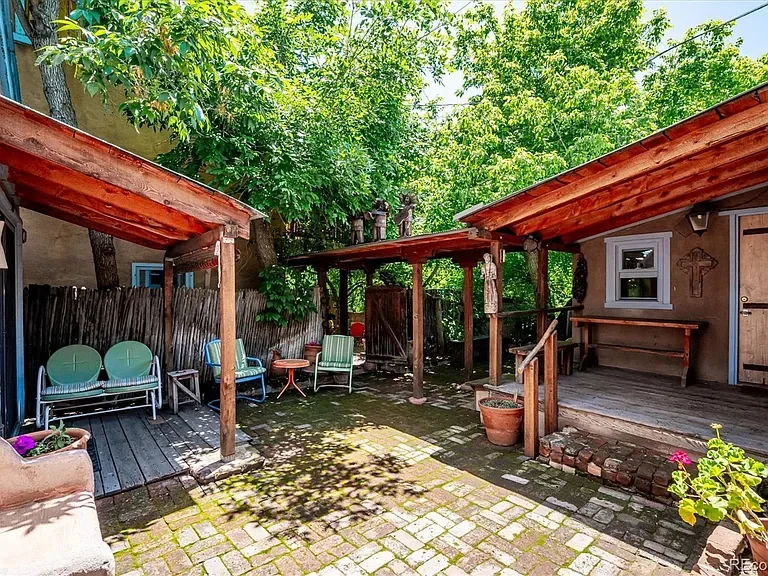
In 2001, they constructed a stunning 1,700-square-foot straw bale residence—an architectural gem designed for sustainability long before it was trendy. They added a studio cottage, a reading and writing shed, and created the brick courtyards that give the property its distinctive Santa Fe character. The result was a unique blend of Victorian heritage and southwestern charm.
For years, the Keskes operated Stage Stop Guest Cottages, welcoming travelers to experience Golden's history firsthand. They decorated the spaces with handcrafted furniture, antiques, and art collected from their travels to Mexico, creating an atmosphere that honored both the building's past and their own creative spirit.
Estrella de Oro: A New Chapter
In December 2025, the property entered a new era. Estrella de Oro (Spanish for "Golden Star") honors both the property's location in Golden and the star-bright hospitality that has always defined this place.
We're now the stewards of a property that witnessed Colorado's transformation from frontier territory to modern state. The same brick walls that once sheltered weary stagecoach travelers now welcome you. The Victorian craftsmanship blends seamlessly with Santa Fe-inspired courtyards. History lives here—not as a museum piece, but as a working part of Golden's story.
When you stay with us, you're not just booking a room. You're becoming part of a narrative that stretches back 150 years, to a time when Golden was the last stop before the mountains and anything seemed possible.